BARITE POWDER FOR OIL & GAS
Control drilling-fluid density with a better barite grinding system.
A field-ready guide to barite as a weighting agent, from ore preparation and 200-mesh production to mill selection, quality control and turnkey plant delivery.
1973 equipment heritageAPI-style product guidanceTurnkey engineering support
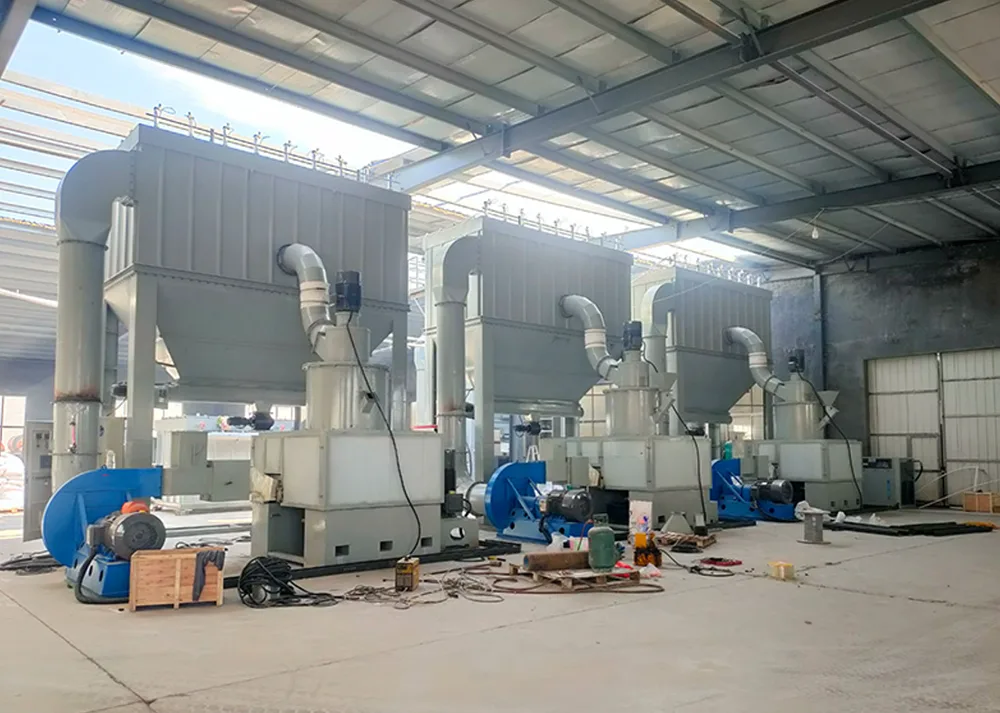
Design around the mud programFineness, density, moisture and tonnes per hour are confirmed before quotation.
RESOURCE MAP
Where barite comes from, and where it goes.
Barite deposits are distributed across several mining regions. The same mineral moves through very different value chains: drilling fluids remain the largest industrial outlet, while fillers, chemicals, medical contrast media and radiation-shielding products create additional demand.
Major producing / processing regionsInternational trade routes
GLOBAL MARKET PULSE
Market direction in one view.
Public market studies use different scopes and base years, so the dashboard below shows directional planning signals rather than a single promised market-size number. Use it to frame a project conversation, then validate the addressable segment, freight and local pricing.
Indicative 2024 market band$0.0Breported global barite market estimates vary by scope
Oilfield share signal0%drilling fluids remain the anchor application
Planning horizon0.0%illustrative mid-single-digit growth case
Illustrative demand index2024 → 2030
Directional index for scenario planning, not a quoted market forecast.Sources used for direction: USGS Mineral Commodity Summaries (barite), API drilling-fluid specifications, public market studies and Cronus process data. Percentages are labeled planning signals where public datasets use different scopes.
OILFIELD APPLICATION, EXPLAINED
Why drilling engineers add barite, what they measure, and how much they need.
Barite works because it is dense enough to raise mud weight without the same volume increase that a lower-density solid would require. In a pressure-controlled well, the goal is not “more powder”; it is a stable operating window between pore pressure, fracture pressure, equivalent circulating density and hole-cleaning limits.
Four reasons barite is chosen
- High specific gravity.Commercial drilling-grade barite is commonly specified around 4.2 relative density, allowing a meaningful mud-weight increase in a manageable solids volume.
- Chemical stability.Barium sulfate is sparingly soluble and normally remains available as a weighting solid across the temperature and salinity conditions defined by the mud program.
- Particle-size control.A controlled PSD helps the mud engineer balance suspension, sag tendency, filtration and solids-control behavior.
- Field availability.Barite is mined and traded globally, so operators can source standard grades near major drilling regions.
Typical specification checklist
Relative density≈ 4.2 minimum target
Fineness200 mesh starting point
MoistureKeep low for stable feeding
Soluble / reactive contaminantsControl to buyer specification
Illustrative engineering screen. The buyer's current API / company specification controls the final acceptance test.FIELD CALCULATION
Estimate the barite addition for a density step.
Enter mud volume and densities to get a first-pass estimate. This is a screening tool only; laboratory checks, sag control and solids limits still govern the field treatment.
Screening estimate0.0 tApproximate added barite mass
WHY BARITE MATTERS
One mineral, three critical jobs in the well.
Barite is selected for high specific gravity, low solubility and chemical stability. It lets mud engineers raise hydrostatic pressure without adding excessive volume.
Balance formation pressure
Increase mud density so hydrostatic head counteracts formation pressure and helps manage influx risk.
Support wellbore stability
A stable pressure window supports decisions on sloughing shale, lost circulation and hole cleaning.
Make density adjustable
Fine barite can be added, removed and recirculated as depth and pressure regime change.
Important: barite is a weighting agent, not a stand-alone mud system. Dosage must be calculated from starting and target densities, base fluid, solids and rheology.
FROM ORE TO DRILLING-GRADE POWDER
A controlled process protects PSD and uptime.
Run-of-mine barite is crushed, dried when necessary, metered into the mill, classified and collected under negative pressure.
- 01Crush & dryReduce lump size and remove surface moisture.
- 02Feed steadilyKeep the grinding load stable with a variable-speed feeder.
- 03Grind & classifyGrinding pressure and classifier speed control PSD.
- 04Collect & packPulse filtration, silo storage and bulk or bag packing complete the line.
Typical 200–325 mesh routeCrusher → feeder → Raymond mill → classifier → pulse collector → silo
EQUIPMENT SELECTION
Match the mill to the product you actually sell.
A standard drilling-grade powder and a high-fineness industrial product have different economics.
Standard drilling grade
Raymond / pendulum mill
Efficient for common 80–325 mesh barite products, with compact layout and straightforward maintenance.
- Best fit: 200 mesh and standard filler grades
- Feed: below 10–20 mm, moisture below 5%
- Strength: lower entry investment
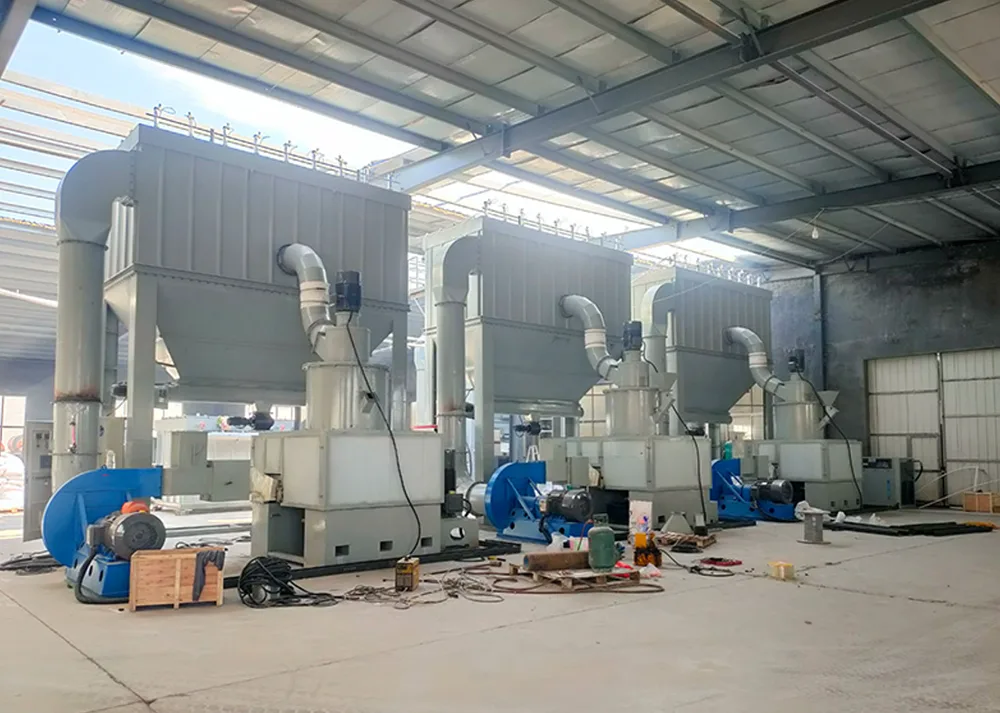
Fine & multi-grade
CRGM ring roller mill
Use when you need finer products, broader adjustment or one plant serving multiple mineral markets.
- Best fit: 325 mesh and finer
- Strength: flexible PSD control
- Trade-off: higher capital cost
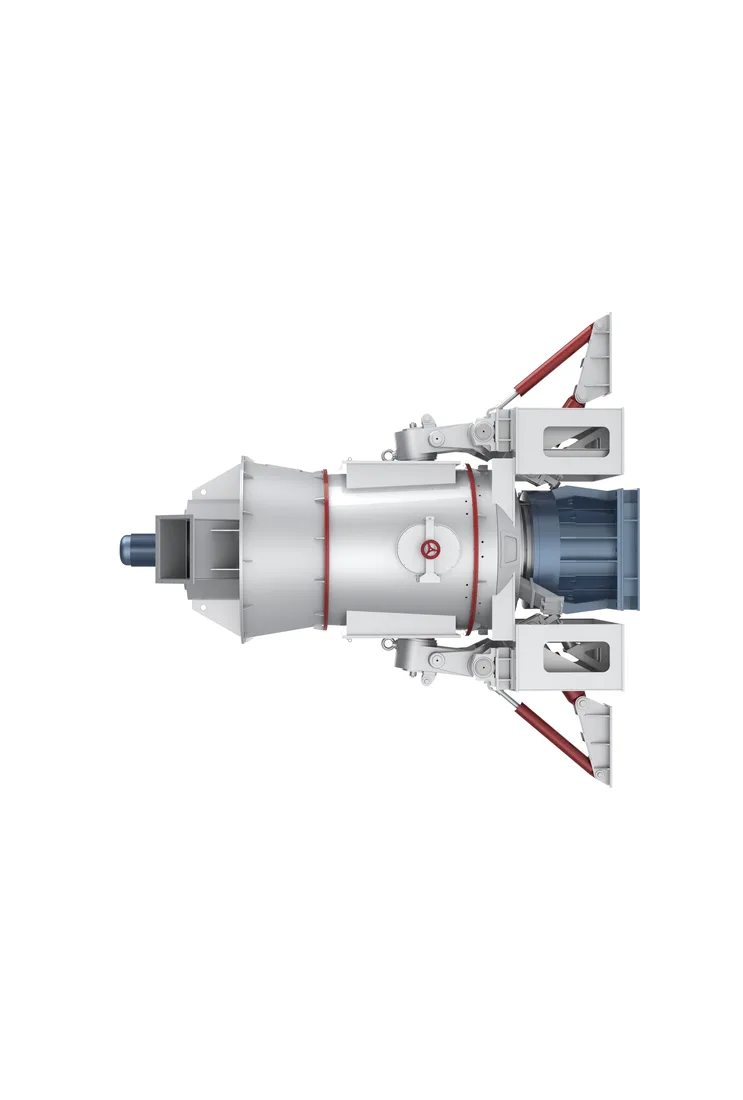
High-throughput route
Vertical mill
A strong option for large continuous plants where drying and process control are fully engineered.
- Best fit: high throughput
- Strength: compact layout
- Trade-off: more complex commissioning
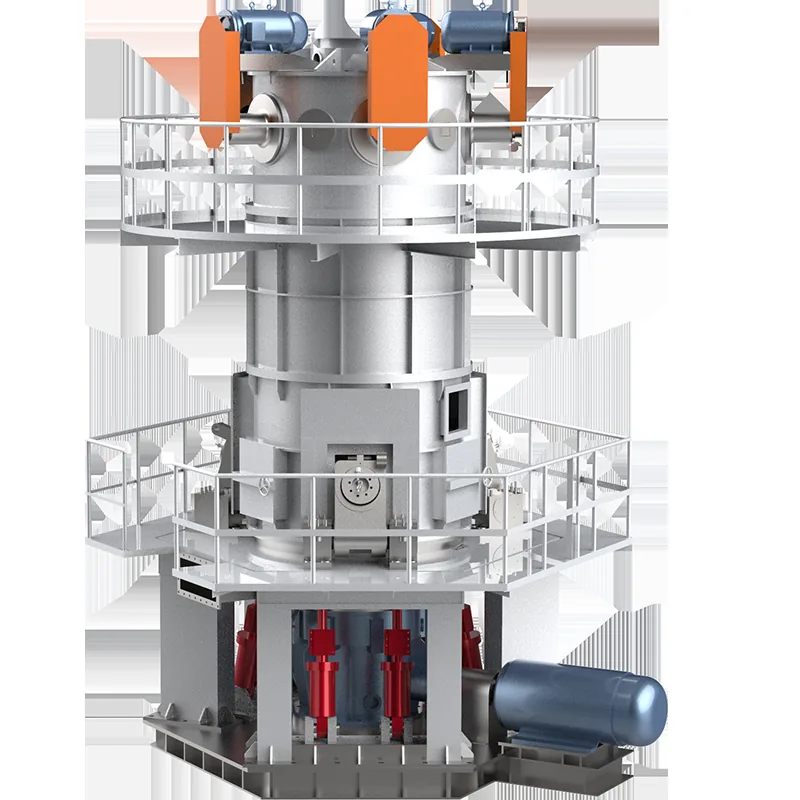 Grinding chamber / classifier / air circuit
HOW THE MILL WORKS
Simple force, controlled air, repeatable product.
Grinding rollers and ring apply compression and shear. Air carries particles to the classifier; coarse particles return to the grinding zone and qualified fines leave for collection.
Compression grindingSupports controlled particle-size distribution.
Dynamic classificationClassifier speed and air volume determine the cut point.
Negative-pressure operationSealed ducts and pulse filtration support a cleaner workshop.
DESIGN DATA
Parameter ranges to start a serious conversation.
Final values depend on grindability, moisture, PSD, bulk density and local standards.
| Item | Typical planning range | What changes the result |
|---|---|---|
| Drilling-grade fineness | 200 mesh starting point; 325 mesh often requested | PSD, density, residue and rheology limits |
| Feed size | Below 10–20 mm | Crusher setting and ore competency |
| Feed moisture | Typically below 5% | Dryer duty and storage conditions |
| Capacity | Model and fineness dependent | Hardness, PSD and air volume |
| Handling | Bulk silo, bags or jumbo bags | Logistics and dust limits |
| Dust control | Sealed negative-pressure circuit | Emission target and filter media |
RAYMOND VS CRGM
Choose the right economics, not the biggest specification.
Choose Raymond when…
- Main product is 200–325 mesh drilling-grade barite.
- Lowest initial investment matters most.
- Moderate capacity and conventional PSD are acceptable.
Choose CRGM when…
- You need multiple fineness grades.
- You are adding coatings, fillers or specialty minerals.
- Fine product value justifies higher capital.
OTHER MATERIALS
The same process knowledge can open new markets.
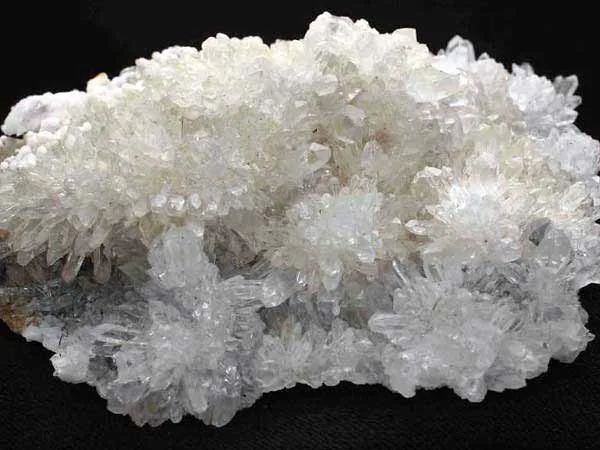
Drilling mud weighting agent
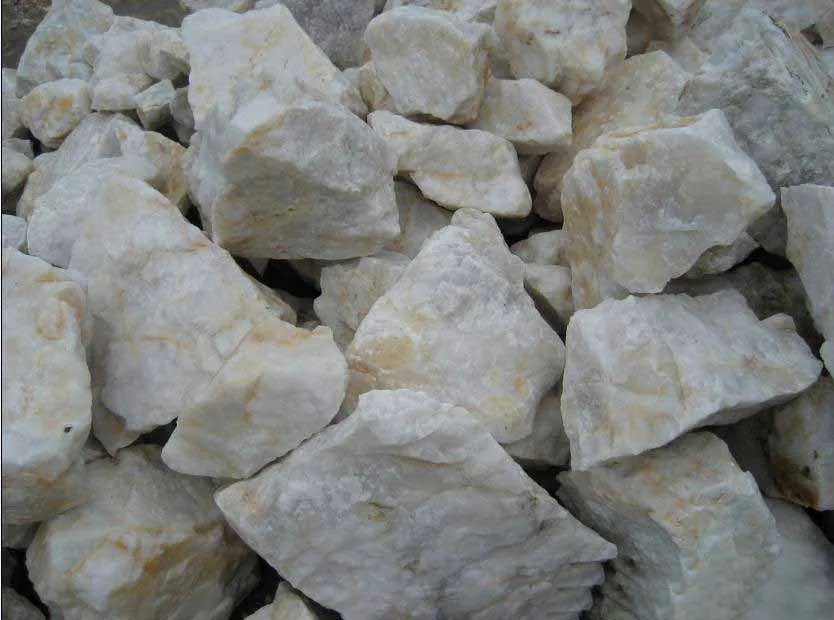
Glass and engineered stone
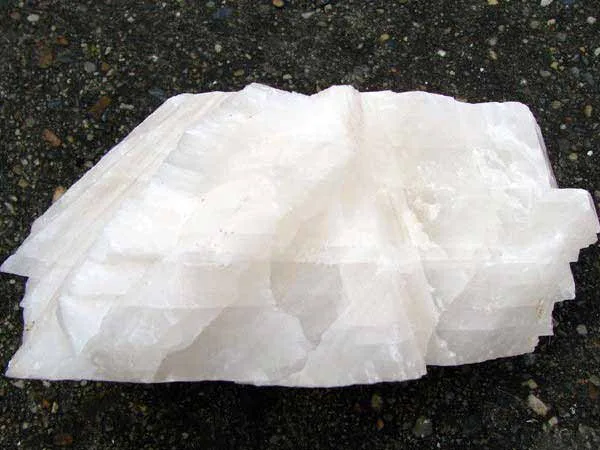
Plastic, paint and paper filler
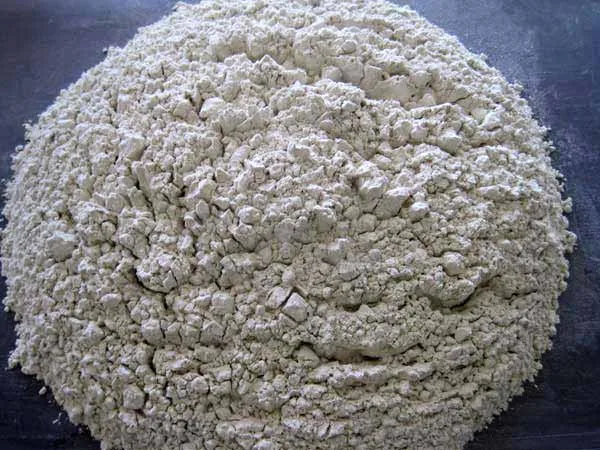
Foundry and drilling additives
CRONUS SUPPORT
Engineering that continues after the quotation.
Cronus combines Guilin Mining Machinery's manufacturing history with Shanghai-based international sales and project coordination.
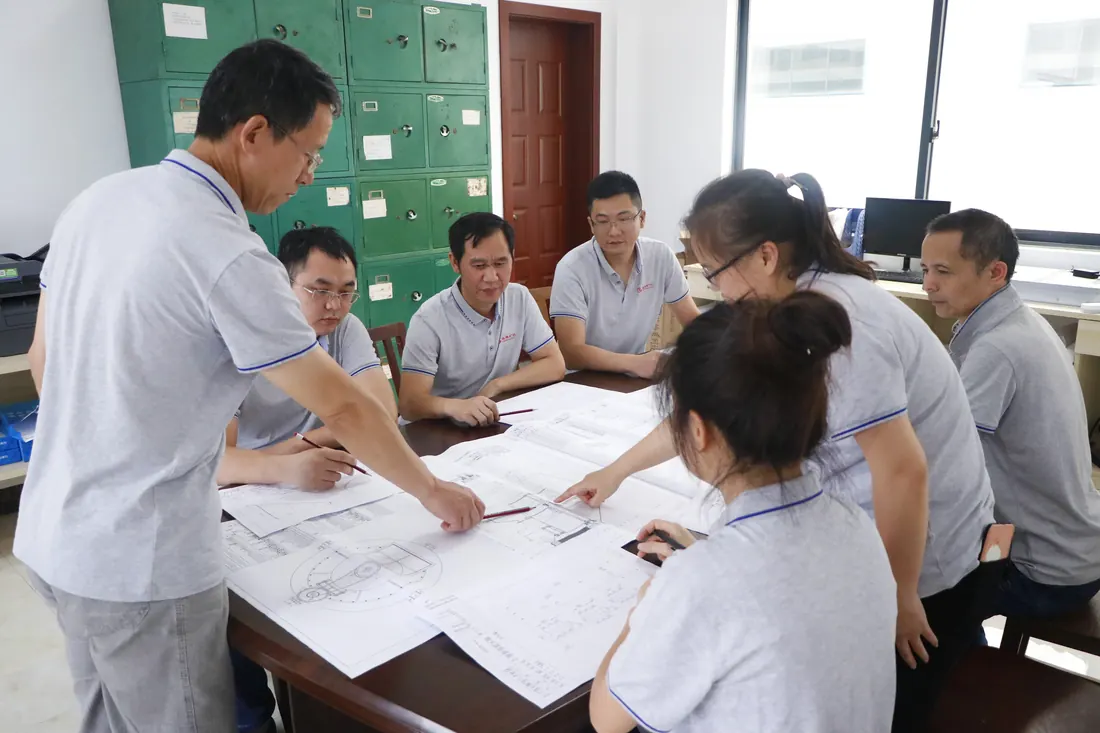
Material test and process proposalPlant layout and electrical controlInstallation guidance and commissioningOriginal wear parts and casting supply
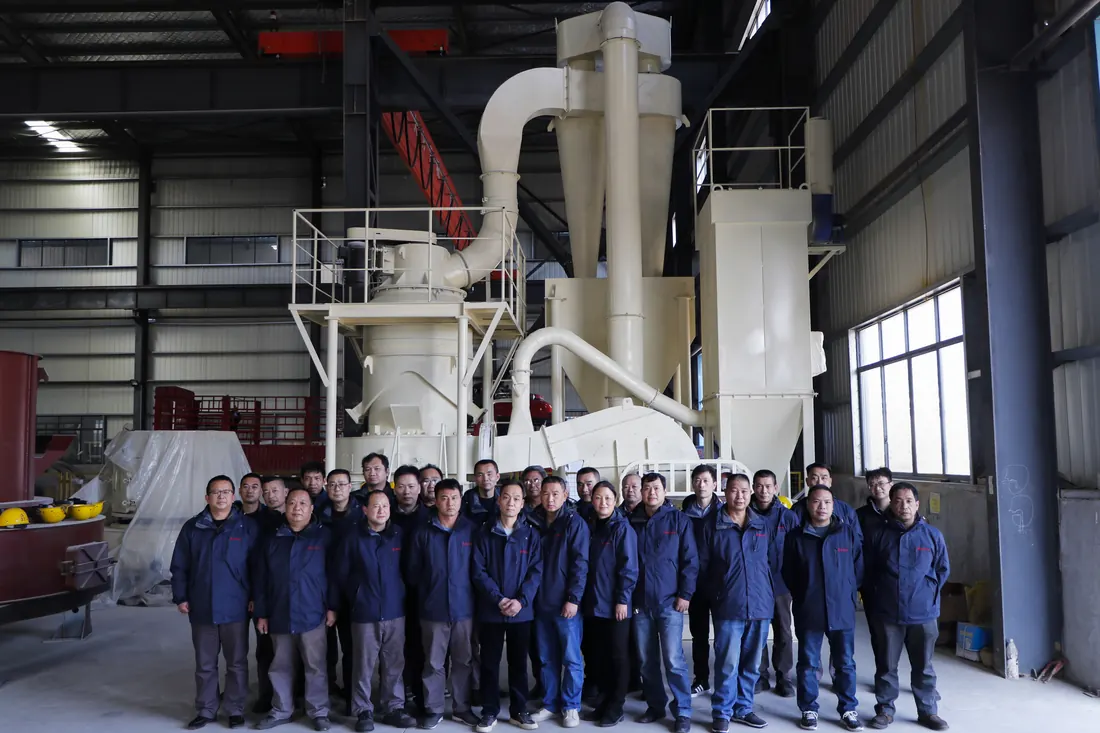
“Start with the sample, the mud target and the delivery requirement. The right mill follows from the process.”— Cronus application engineering team

ABOUT CRONUS
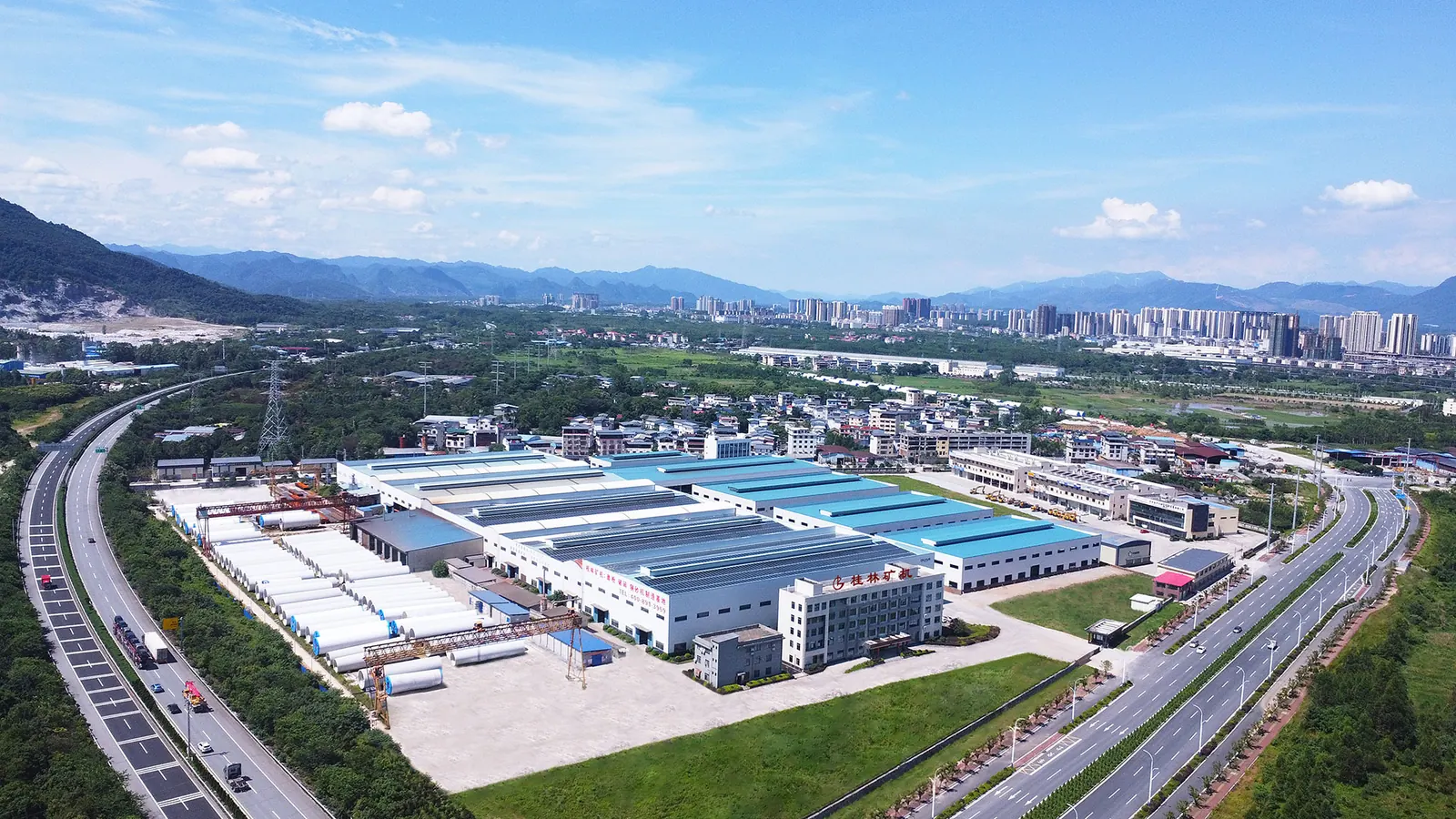
More than 50 years of equipment manufacturing.
Cronus is the international-facing subsidiary of Guilin Mining Machinery, founded in 1973. The group focuses on grinding, classification, dust collection and complete mineral powder lines.
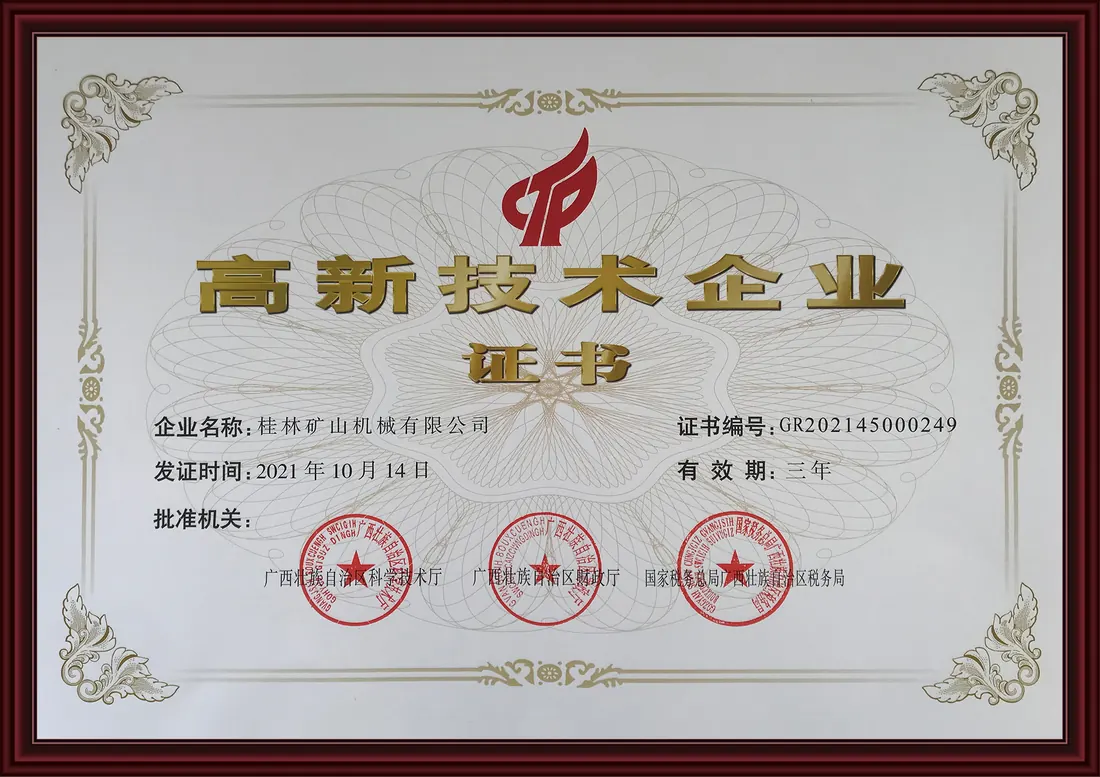
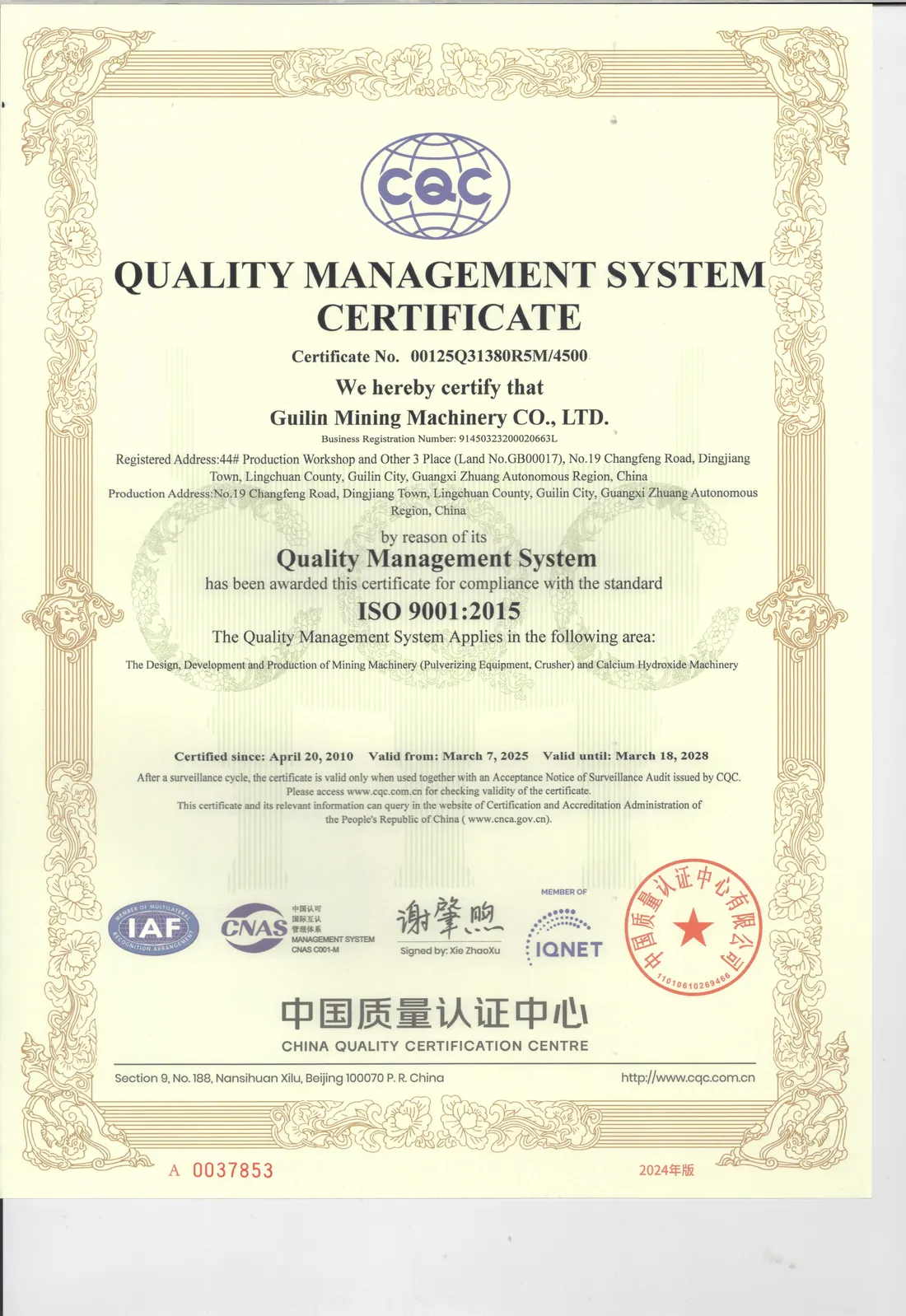
Recognition includes high-tech enterprise status, patents, CE-related product compliance work and ISO management certifications. Project claims are backed by the corresponding certificate, drawing or test record.
1973Founded
50+Years of manufacturing
24/7Response coordination
FAQ
Questions buyers ask before selecting a barite mill.
Why is barite used in oil and gas drilling fluid?
Its high density raises hydrostatic pressure while low solubility and chemical stability make it practical for drilling mud.
What fineness is commonly used?
200 mesh is a common starting point, with 325 mesh and customer-specific PSDs also requested.
How much barite should be added?
Calculate from starting and target mud densities, base-fluid density and existing solids; there is no universal dosage.
What wear parts should be stocked?
Rollers, grinding ring, turntable, shaft, pins, classifier parts, fan impeller and filter bags.
Do you provide a material test?
Yes. Share a sample or full feed and product data for a process proposal before quotation.
Can the plant process quartz or calcium carbonate?
Often yes, after checking contamination, wear, hardness, moisture and target fineness.
What is the complete process flow?
Crushing, drying when required, metered feeding, grinding, classification, pulse filtration, storage and packing.
How do you control dust?
The line is normally sealed and operated under negative pressure with a pulse dust collector sized to the emission target.
Can one line make several grades?
With a suitable classifier and process controls, one line can cover multiple grades, subject to changeover and contamination requirements.
How long do original spare parts take?
Lead time depends on the part and destination. Cronus can check drawings, material and shipment options before order.
Do you support overseas commissioning?
Cronus coordinates layout review, installation guidance, commissioning support and operator training according to project scope.
What should I send for a quotation?
Send ore sample or analysis, feed size, moisture, target fineness, t/h, packaging, power standard and destination.
START WITH YOUR DATA
Tell us what the mud program requires.
Send material source, feed size, moisture, target mesh, hourly capacity, packaging and destination.
sales@shcronus.com+86 199 2122 1418Shanghai Pudong · Room 801, Building 2, Shanghai Zhicheng, No. 8666 Hunan Road